A common dilemma persists in contemporary classical music: How can a new work gain momentum beyond its premiere? While premieres offer prestige, too many compositions fade quickly from view. A professional recording is one of the most effective ways to increase a composition’s chances of being performed again by different ensembles, in new regions, and across broader contexts.
Read on to see how creating a recording not only documents a piece, but helps propel it into future concert halls, shaping its long-term visibility and viability.
Recording as a Launchpad for Performance
Recordings often precede or quickly follow a composition’s live premiere, and when they do, evidence shows those works are more likely to receive additional performances. Availability of a recording can create a ripple effect that influences future programming decisions.
Performers, music directors, and programmers routinely cite recordings as a vital tool in repertoire discovery. A recording allows a piece to travel beyond the concert hall where it can be studied, shared, evaluated, and ultimately, performed again.
From Recording to Repertoire
PARMA leads initiatives for recording and performance opportunities year-round with leading classical performers and world-renowned venues in an effort to gain visibility for new music. Selected works are professionally recorded and commercially released, setting the stage for ease of programming future live performances.
A GRAND JOURNEY VOL. 2
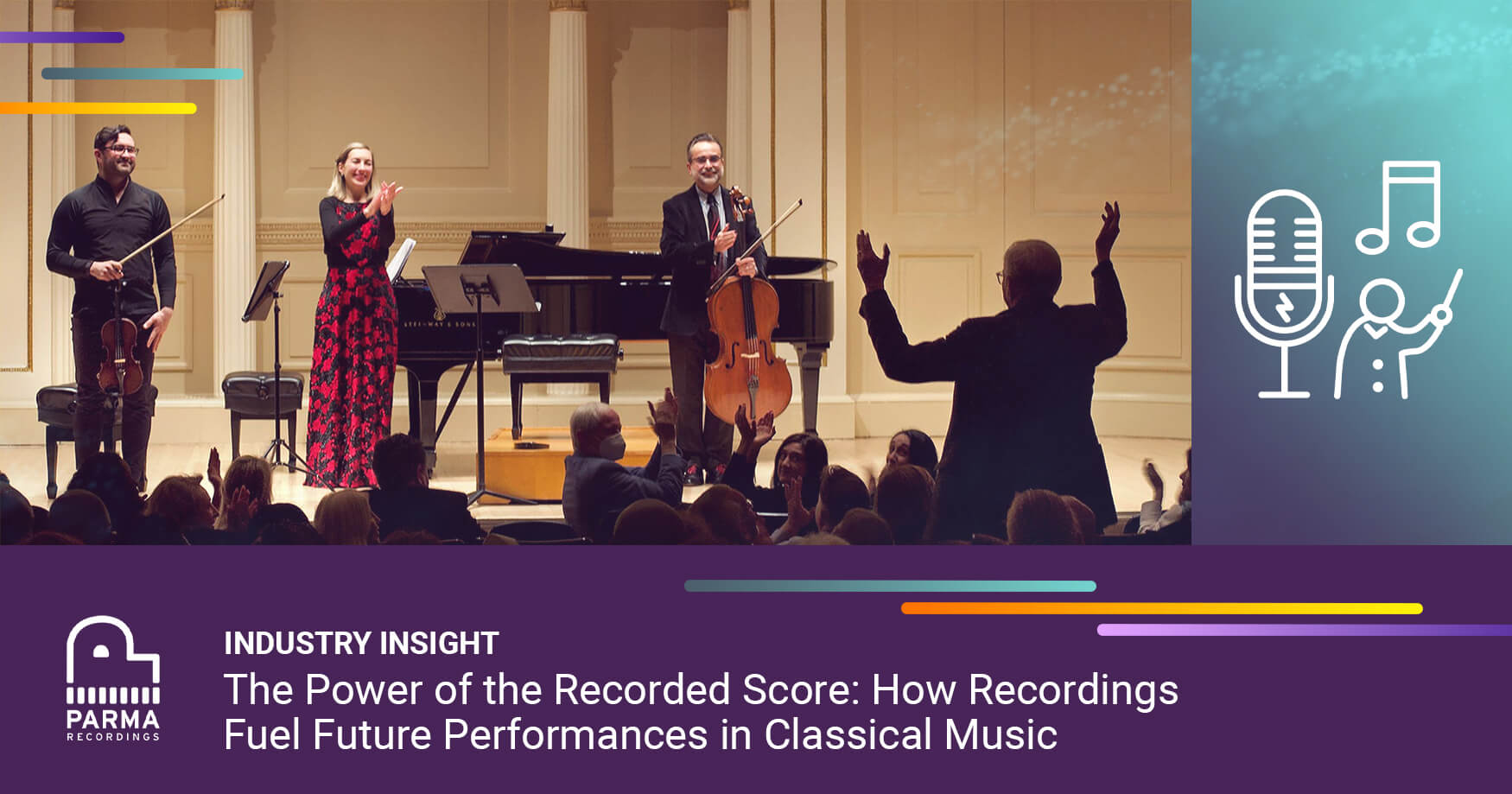
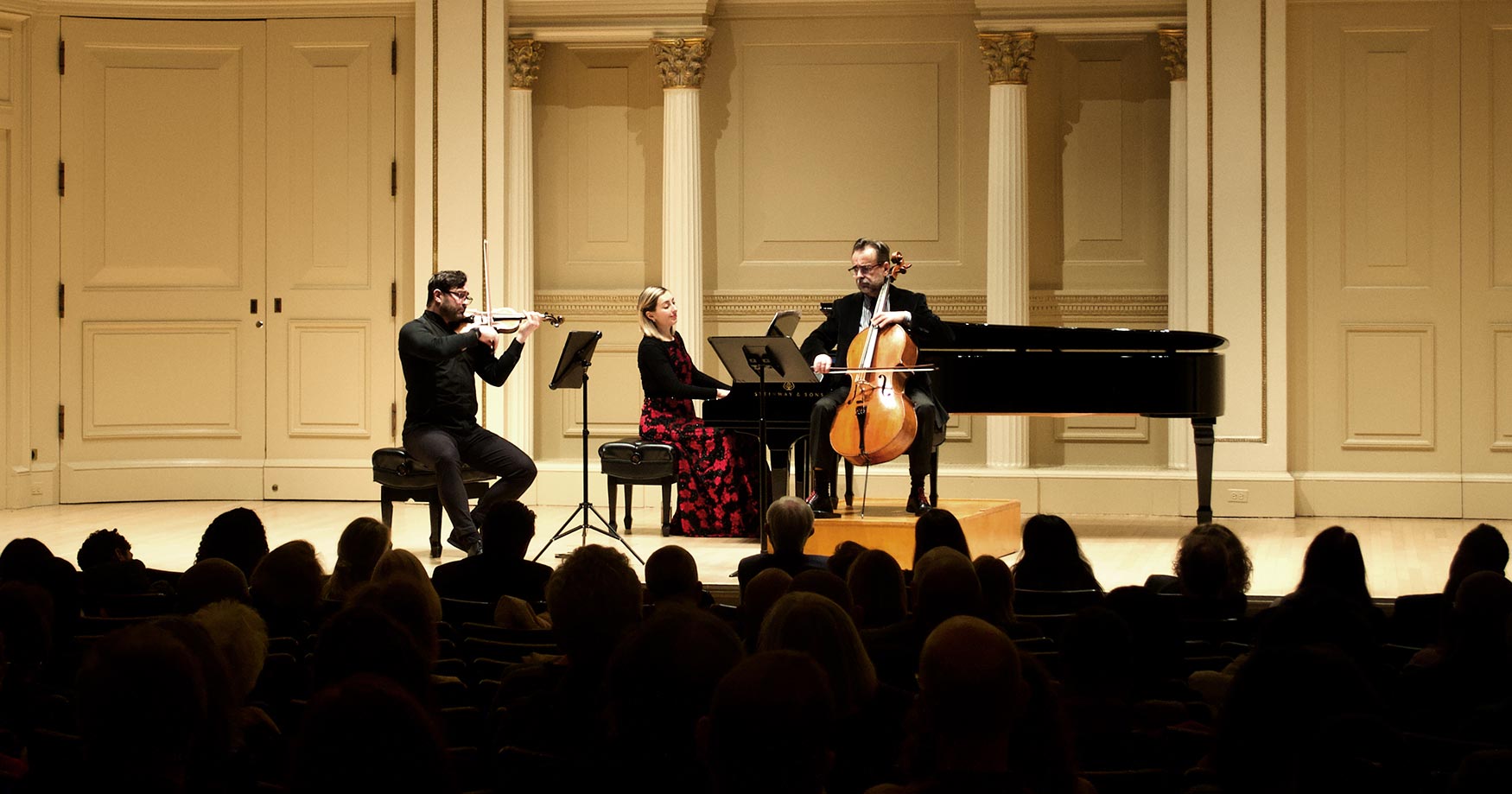
In November 2023, Trio Casals brought music from their 2023 Navona Records release, A GRAND JOURNEY VOL. 2, to the Weill Recital Hall stage at Carnegie Hall. Programmed from submissions to a Featured Recording Opportunity and coordinated by PARMA, the ensemble presented chamber music from composers Bruce Babcock, Richard E Brown, Elizabeth Vercoe, Andre’ E. Godsey, John Summers, and Brian Field.
“One of my lifetime dreams was to have music performed at Carnegie Hall,” said composer Andre E. Godsey, Sr.
“The way to Carnegie Hall runs through practice and PARMA.”
IN THE COMPANY OF MUSIC
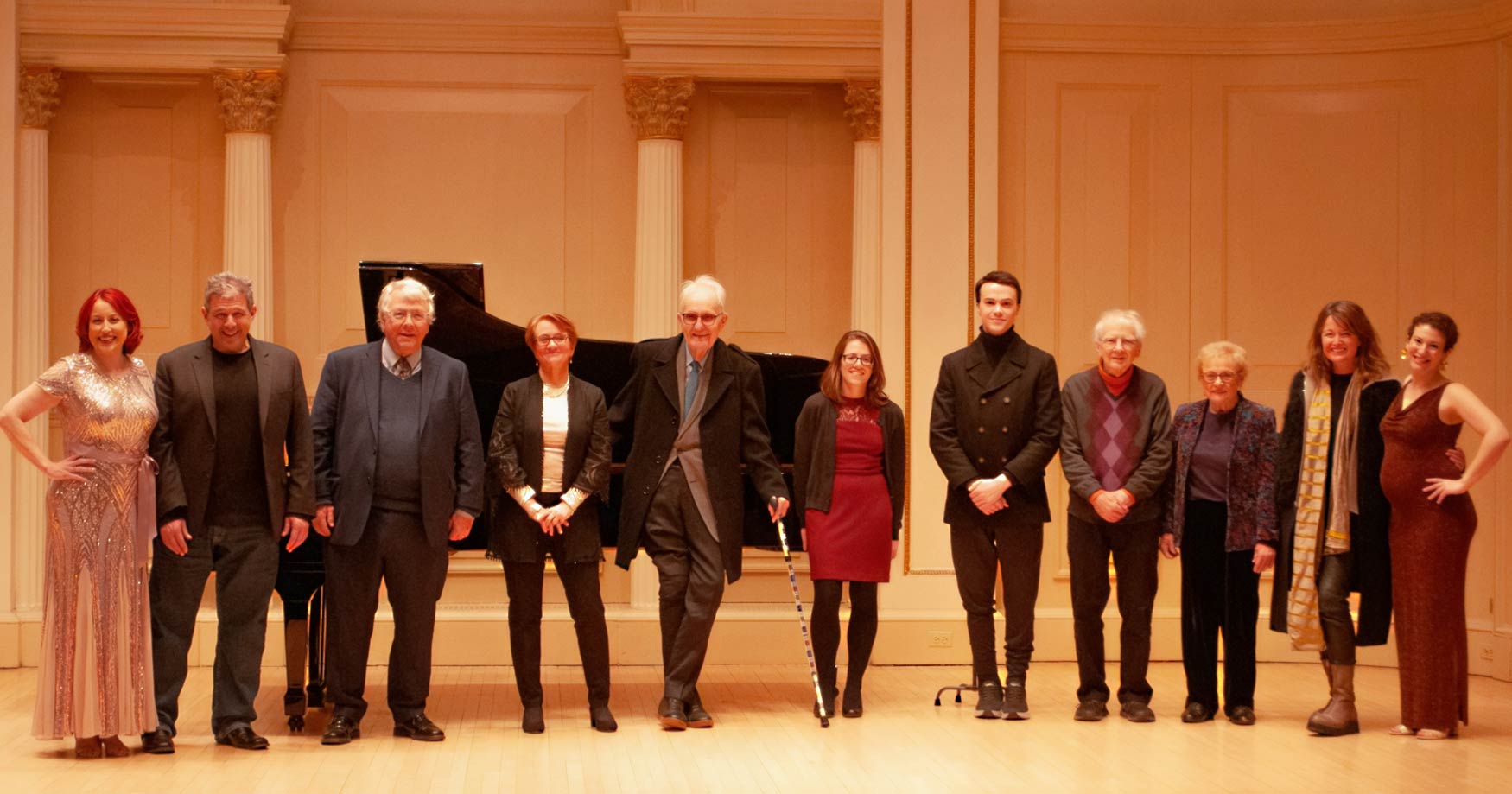
Flutist Lindsey Goodman and pianist Clare Longendyke presented a similar experience with IN THE COMPANY OF MUSIC, a contemporary classical program exploring traditional expressions, the avant garde, and everywhere in between with music by composers Melissa D’Albora, Allen Brings, Christopher Jessup, Anthony Paul De Ritis, Richard E Brown, Mark G. Simon, Deon Nielsen Price, and Heidi Jacob.

PARMA Artists and Programming Classical Music
Works with recordings are significantly more likely to be performed by ensembles who did not commission or premiere the piece and appear on international programs or festivals. These trends can be seen among several PARMA artists.
Composer Mark Dal Porto’s tone poem Song of Eternity was recorded by the Moravian Philharmonic Orchestra and released on Navona Records in 2013. Following that recording, the piece gained substantial momentum, winning the 2013 CODA Prize and later performed by university and regional orchestras across North America and Europe. Many ensembles cited the recording as a key reference in their decision to program the work.
Edie Hill’s choral Navona Records album CLAY JUG (2017), performed by The Crossing under Donald Nally, brought her music to the attention of a broader audience. Since the release, works from the album — including Clay Jug, Spectral Spirits, and Alma Beata et Bella — have been performed at venues such as Lincoln Center and LACMA, and by choral festivals and regional ensembles. Hill and The Crossing later received a GRAMMY® award for Best Choral Performance for their 2022 Navona Records album, BORN, paired with another new work by composer Michael Gilbertson.
Composer Dan Perttu’s orchestral works Phoenix and To Spring were recorded by the London Symphony Orchestra and Moravian Philharmonic Orchestra, respectively, and released by Navona Records. Since their release, these works have been performed by the Eastern Connecticut Symphony, Fox Valley Symphony, Sierra Vista Symphony, and others across four continents. The recordings gave conductors and ensembles confidence in programming the pieces and helped solidify Perttu’s position as a regularly performed living composer.
These examples reinforce the broader trend: recording a work transforms its trajectory from a single moment to a sustained presence.
Recommendations:
There are a few key steps that composers should consider when preparing a new piece that will increase likelihood of performance opportunities.
Recording a new composition does more than preserve it. It brings the music into the ears of potential performers, presenters, and audiences who otherwise may never encounter it. If we want today’s classical compositions to become tomorrow’s revered repertoire, then capturing them clearly, accessibly, and early is not optional. It is essential.