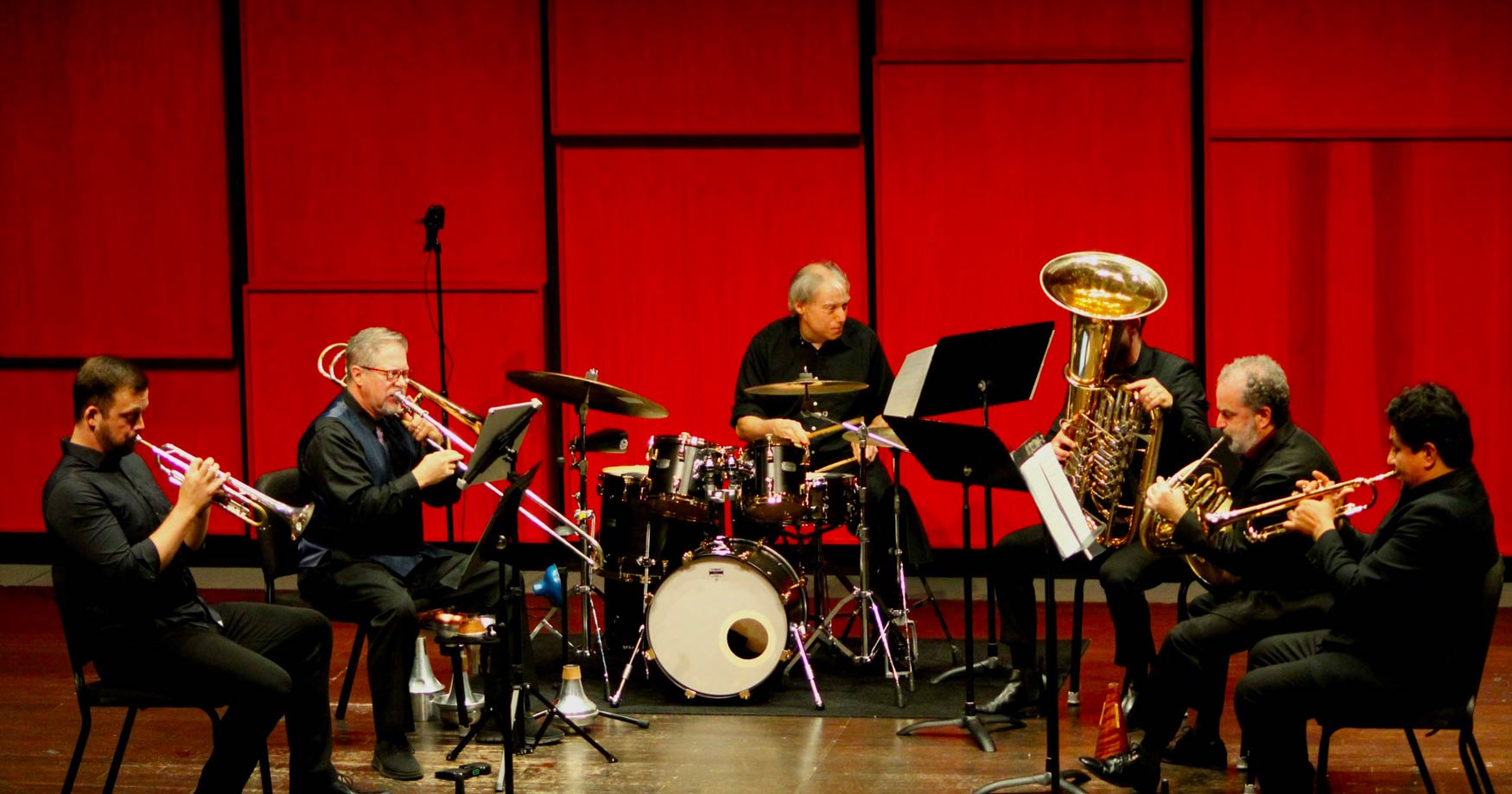
The first time the Meridian Arts Ensemble found themselves hauling gear into a living room instead of a concert hall, they may have wondered if someone had gotten the address wrong. But it wasn’t a misprint — it was the Utility Muffin Research Kitchen in Los Angeles, and they were there to play for Frank Zappa himself.
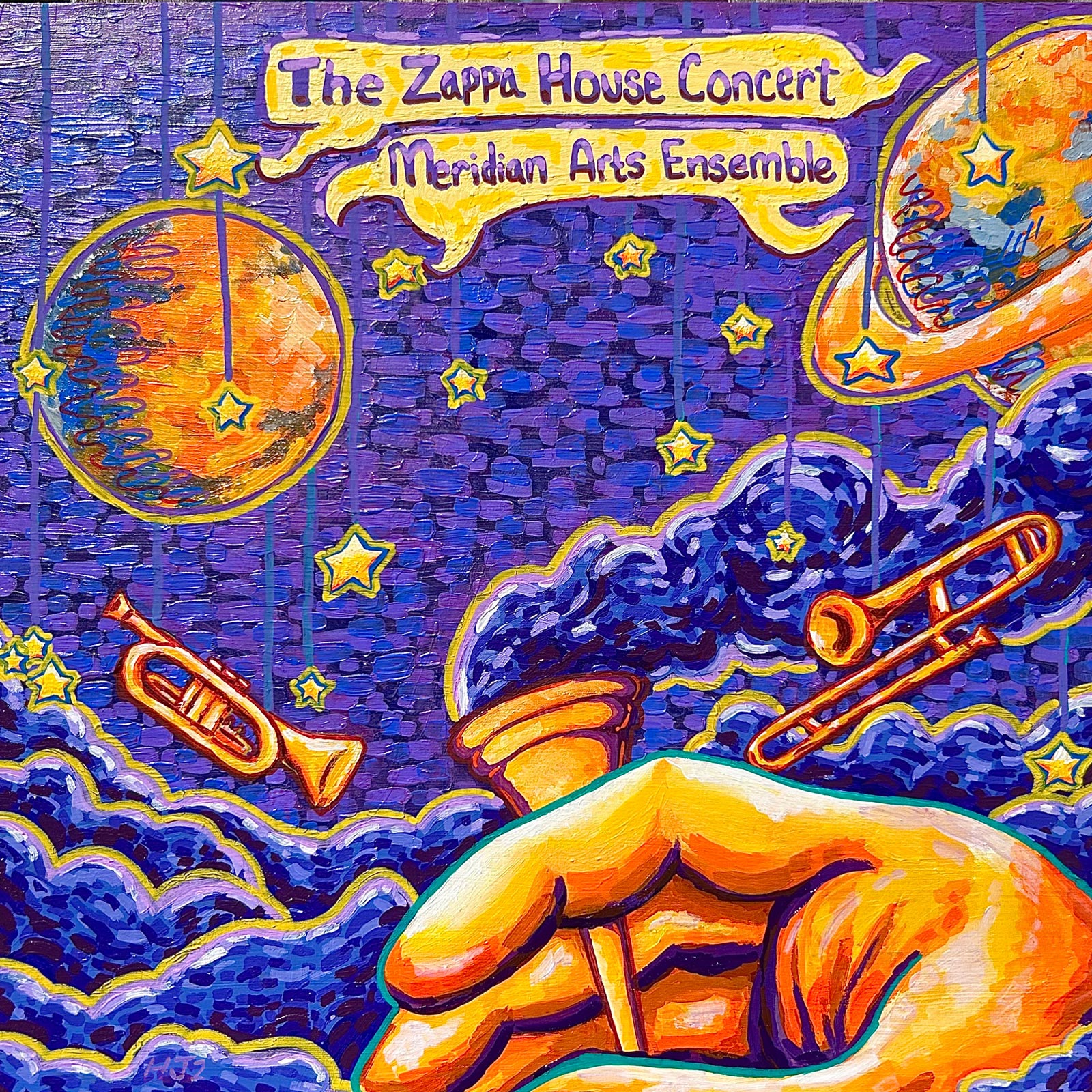
THE ZAPPA HOUSE CONCERT captures a private 1996 performance by the Meridian Arts Ensemble at Frank Zappa’s Los Angeles home. After several years of arranging Zappa’s music for brass quintet and drums, the group finally got their chance to meet with Zappa himself in 1992. Zappa died in 1993, and the MAE performed a house concert for invited guests at the Zappa house in 1996.
The program included works such as Big Swifty, T’Mershi Duween, Dupree’s Paradise, Harry You’re a Beast, and The Orange County Lumber Truck, along with many works by other composers. The MAE’s work with Zappa marked a major turning point for the ensemble, now famous for its formal chamber recitals, rock and jazz club shows, private house concerts, and more.
Catching Up With Meridian Arts Ensemble
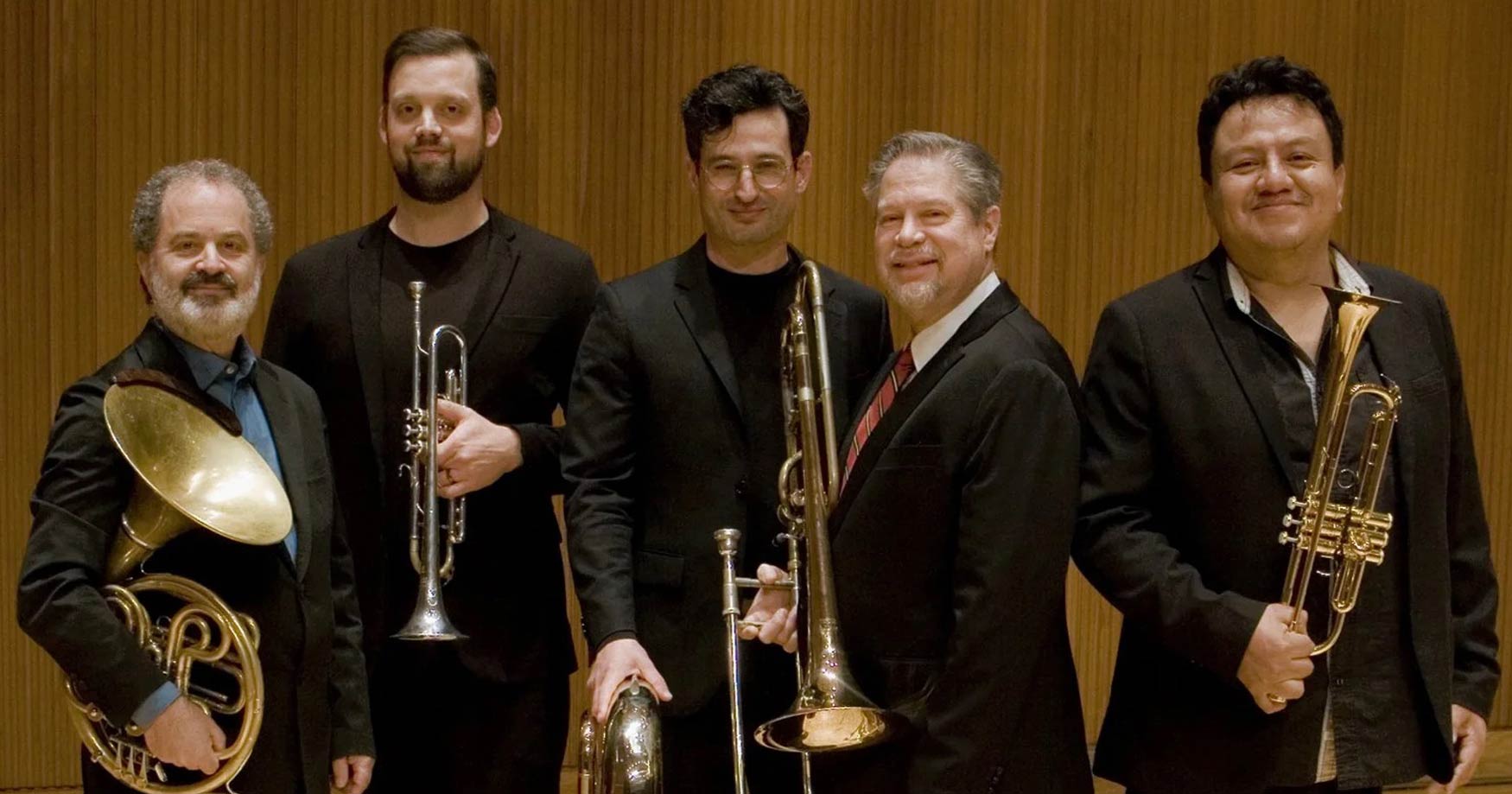
Our recent conversation with the Meridian Arts Ensemble members explores the wisdom Zappa imparted unto them, the early days of the ensemble’s artistic pursuits, and “ the mosaic” of taste that makes up their oeuvre…
How did Zappa impact your artistic journey? Is there any wisdom they imparted onto you that still resonates today?
MAE: We started playing Zappa’s music around our 3rd year of existence, around 1989. We were able to connect with Frank, to play for him at his house, to play again for him around what became his deathbed, to record with his son, and to play the concert at his house that is heard on our new release with PARMA. Frank was a prolific creator of music. His music was complex and almost always sat on the outer edge of playability (the musicians in his bands were absolutely incredible), but was also approachable, often funny (he urged us to be “goofy” when we played his songs), sometimes sophomoric, sometimes dead serious, sometimes full of dead-aim mockery, frequently beautiful but sometimes angry — it spanned a bigger world than we had known about. Zappa made us better musicians, and his impact on the group was enormous, both in depth and breadth of what we tried (and continue to try) to accomplish. His term for stylizing music was “putting the eyebrows on it.” That’s what we try to do with every piece we play.
If you could collaborate with anyone, who would it be?
MAE: We would have trouble choosing one person to collaborate with, but whoever we joined forces with would have to be musically inspiring, hopefully in some way that we have never thought of. It could be someone from an entirely different musical culture from around the world, or a non-brass player from our own tradition, or someone from a different genre (like a funk guitar player). Someone who stretches us, inspires us, and teaches us new ways of expression. Someone who plays something, and one of us says “Wait, what did you just do??” Someone who can teach us a new style, a new groove, a new feel.
What advice would you give to your younger self if given the chance?
MAE: Our ensemble formed when we were young (in our early 20s). We had to learn how to rehearse, learn how to perform, learn how to tour, learn the business of music, learn how to be good to each other — even in stressful situations, learn the body language of chamber music, and learn how to learn new styles. It felt like we were building the plane in the air. I would urge our earlier selves to learn the art of patience (though our impatience sometimes served as a motivator), the art of grace to each other, the art of resting, the art of taking our own sweet time. We did learn these things in the end, though we’re always trying to improve. It is probably fair to say that playing in Meridian is one of the most supportive environments we can imagine in the professional world, and the abundance of love and respect in the group is inspiring.
What emotions do you hope listeners will experience after hearing your work?
MAE: Our concerts have variety as their primary hallmark. We explore many styles, often from around the world. We have always had the attitude that “music is music.” For every piece we play, we have to figure out what makes it tick, be it a transcription of a South African vocal piece, an atonal modernist piece, a Bach fugue, or a folk melody from Costa Rica. We hope that the audience reaction will be something like “That sounds right, that feels good, that works, I loved it.”
How have your influences changed as you grow as a musician?
MAE: Our band started, when we were barely adults, by exploring “new music deserving greater recognition.” As we grew up, we became very interested in exploring the music we listened to casually. We all had broad listening tastes, and we started arranging the pieces we were listening to for the group. Each of us would bring listening ideas to the group, and we expanded each other’s stylistic worlds. We continued to play lots of new music and lots of older music, but we started exploring jazz, rock, funk, music from around the world, and eventually our own selves as composers. Each new piece that we play develops the mosaic that constitutes our group taste.
Where and when are you at your most creative?
MAE: The Meridian Arts Ensemble is at its most creative in the rehearsal room. Over the course of our 38 years of playing together, we’ve become pretty adept at putting complicated music together, which means we can devote lots of rehearsal time to trying to figure out the stylistic nuances of whatever we’re playing. We’re wide open to each other’s ideas, and no idea is too crazy to try. By the time we bring a piece onto the stage, we’ve chopped it, seasoned it, put it in the oven, frozen it, defrosted it, added herbs and spices, and re-seasoned to taste. All of that happens in rehearsal.