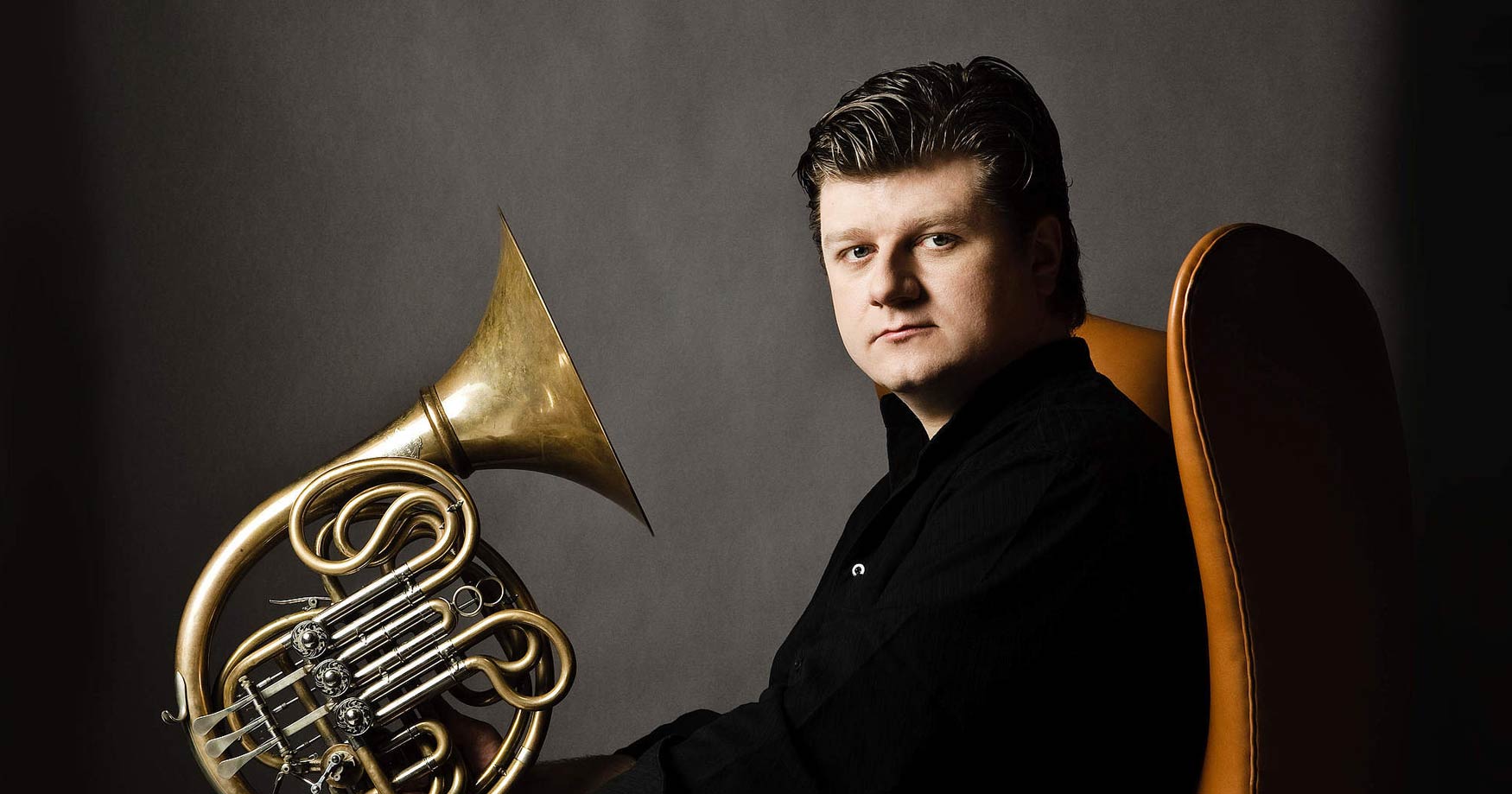
photo: Radek Baborák | credit: Petra Hajska
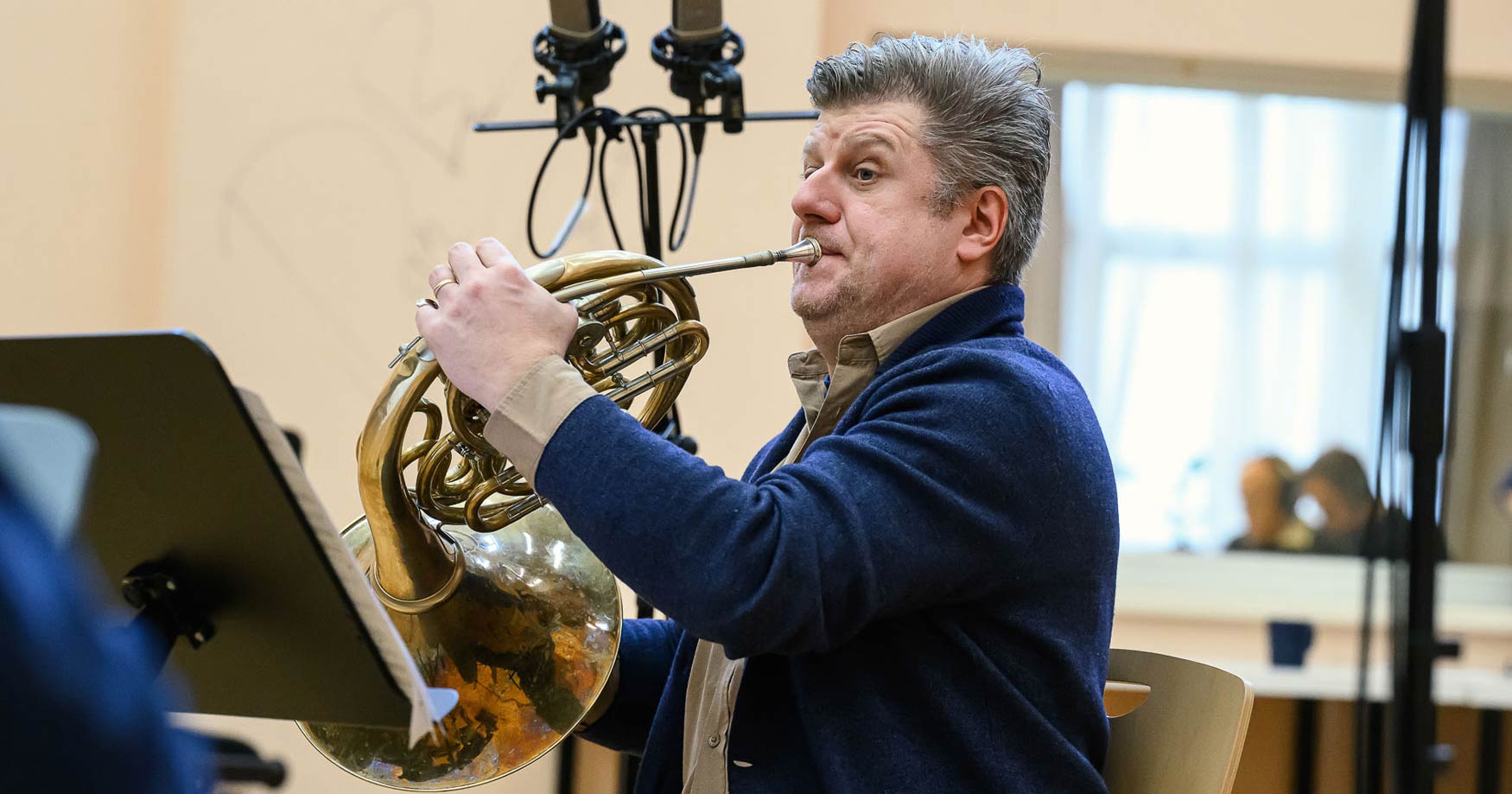
February brought several contemporary composers together to begin recording new classical music submitted to PARMA’s recent Featured Recording Opportunity with celebrated hornist Radek Baborák at Prague’s Studio Martínek.
Recording at Studio Martínek
Over the course of three days, Baborák, paired with musical collaborators including clarinetist Lukáš Dittrich and pianist Miroslav Sekera, recorded new classical music by composers Daniel Ott, Deborah Kavasch, Joseph T. Spaniola, Robert Gans, Peter Dickson Lopez, Erik Sandberg, Ivar Lunde Jr., and Richard E Brown.
These works, along with several others to be recorded in March, will be released together on a full album of classical chamber music for horn on PARMA’s GRAMMY®-winning Navona Records label.
“Baborák recorded my two solo horn pieces in a marvelous way,” said Sandberg. “PARMA’s technical and musical knowledge was very convincing and apparent. The recording session was so intense and efficient, and yet I never felt any time pressure. It was overall a great experience for me.”
Composer Deborah Kavasch had a similar recording experience with Baborák, whose distinguished tone was the perfect match for Kavasch’s new work, Dragonslayer.
“He makes playing the horn sound so easy, so effortless, robust, smooth, dancing, heroic — all the sounds needed in my piece.”
Get an inside look at PARMA’s recording session with Baborák in this video.
About Radek Baborák
If you do a search for Top French Horn players of all time, you’ll be hard pressed to find many lists which don’t include Baborák.
Radek Baborák is a celebrated performer and educator with over 35 years of international experience. He has performed as a soloist with the Berlin and Vienna Philharmonic Orchestras, under leading conductors such as Simon Rattle, Daniel Barenboim, Seiji Ozawa, and John Eliot Gardiner. His extensive experience as both horn soloist and conductor brings an unparalleled level of artistry and insight to every project he leads.
Baborák’s special connection to contemporary classical music dates back to his early experiences with performing, giving prize-winning interpretations to new works in competition. His continued work with performing and eventually conducting solidified his love and appreciation for new music.
“When I started conducting, I was very happy to take on the task of premiering or performing works by living composers.” said Baborák in a recent interview with PARMA.
“In my opinion, it is also a certain duty of every musician — to perceive music as something that has a past, present, and future. And it will show which songs will become part of the repertoire.”
Read our full conversation with Baborák.